
Using the Moment
Acting Beautifully
Life’s events don’t happen at a big picture level. Our big picture visions are made up of the maps and the stories held in our minds. Life’s events happen at the level of the concrete moment where we have experiences and where our actions impact the world.
Since an understanding of life’s big picture only exists in our minds, a person’s sense of their personal Way only becomes truly meaningful when it is used to orient them during specific moments. The environment the person is in is then transformed into the setting of piece of drama. Scene can build upon scene. Narrative arcs can grow. But it is what happens within a particular scene that determines how a story plays out.
For a person to act aesthetically within a scene, they have to find their direction within it — they need to take aim — and they need to play intelligently, activating their abilities and sensibilities so that they’re able to perform specific tasks well.
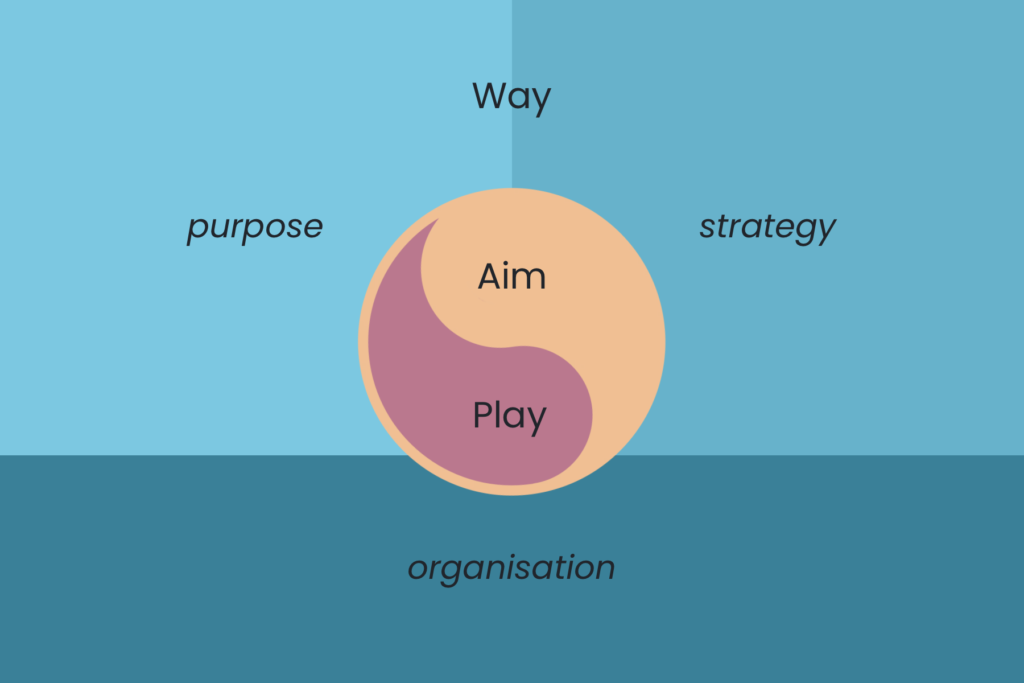
Aiming
Our lives have many rhythms, including the activity-level rhythm where we choose an activity to engage in, begin it, make progress, bring the activity to a close, then choose what activity to engage in next. Choosing and doing, over and over again.
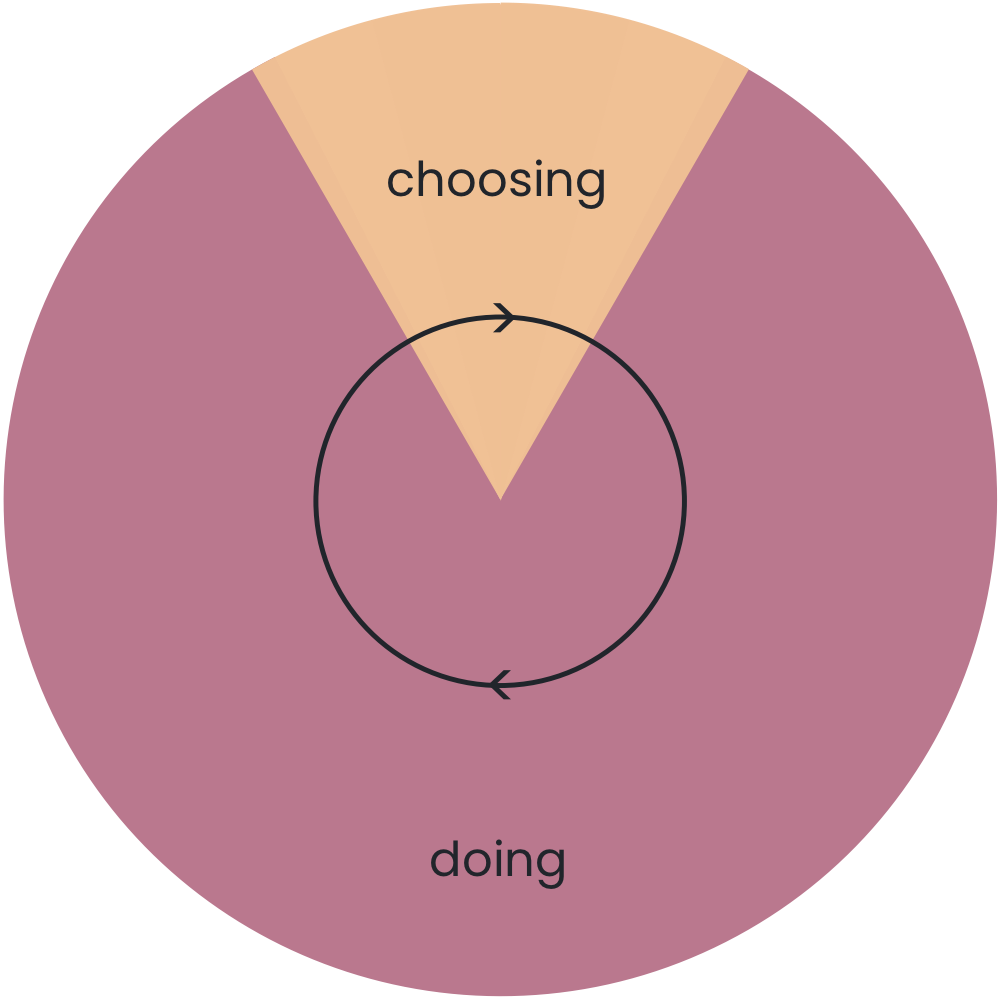
Navigating these action cycles intelligently takes insight. A person must read the situation they are in and become oriented and make a choice of what to do next. Ideally, before launching themself into action, they will also become clear about what exactly they’d like to achieve within the activity and they’ll become physically and mentally ready to perform at their best.
There is usually some abstract thinking needed for this aiming — some thinking through of how an existing strategy might be pursued, or some working out of steps to follow. So the person will need to engage the parts of their mind that enable them to think in the abstract.
This ‘inner director’ will also need to operate from time to time as the activity unfolds. The person will need to monitor their progress, get feedback and update their aim. And they’ll need to notice any changes in their surroundings that make it appropriate for them to switch to a new activity.
Playing
There is a big difference between the kind of insights a person has when thinking about an activity and the kinds of insights they have while fully immersed in the activity. If the person’s attention is occupied with abstract thinking — even thoughts about the current activity — their thoughts will interfere with their ability to perform. Their ability to perceive details will be impaired, as will their ability to come up with innovative and well-crafted actions.
It is only when the inner director falls silent that the parts of the person’s mind needed for skilled performance — their ‘inner actor’ — can be fully activated.
The person can then be guided by their aesthetic instincts. They can look for ways to do things well in their own terms. They can treat the activity as a game and try to discover what it means to play that particular game well. There are always new moves to find. It is always possible to reach a new level of harmony with other players and with the game itself.
Being Fully Alive
Treating activities as games can help a person enjoy the fact that they’re an animal alive within a benign universe, equipped with a mind that is able to direct its capacity for insight anywhere it chooses.
Life on Earth as a whole is like a great game that plays for the sake of playing itself. As small parts of this spectacle, it makes sense for each of us to enjoy the little games that form part of the great game.
When we abandon ourselves to the actuality of life, we become fully able to enjoy what a particular moment offers on its own terms. We feel what it is like to be on a personal journey through this world with all the complexities of emotion, all the struggles and triumphs, and all the unpredictable turns of event that we encounter. Life fully becomes the daring adventure that it always was.