Big Picture Clarity
Aesthetic Alignment
A good place to start in an investigation is with the big picture of the person’s life. The aim, here, is for the person to work out how to align themself with an examined sense of what matters.
In ethical approaches to living well, people align with the greater good through following rules and applying principles. If the rules and principles work well, the person will avoid harmful actions and maybe do their bit to make this world a healthier and happier place. The alignment is mediated by systems of idea.
But a person can also attain a more direct life alignment. They can draw on all their faculties — including their imagination, their capacity for empathy, and their knowledge of the world — to examine the specifics of their lives at a big picture scale. As their investigation progresses, it will become possible to identify the courses of action that would be most worth pursuing. How to come into harmony with reality as a whole will become clear.
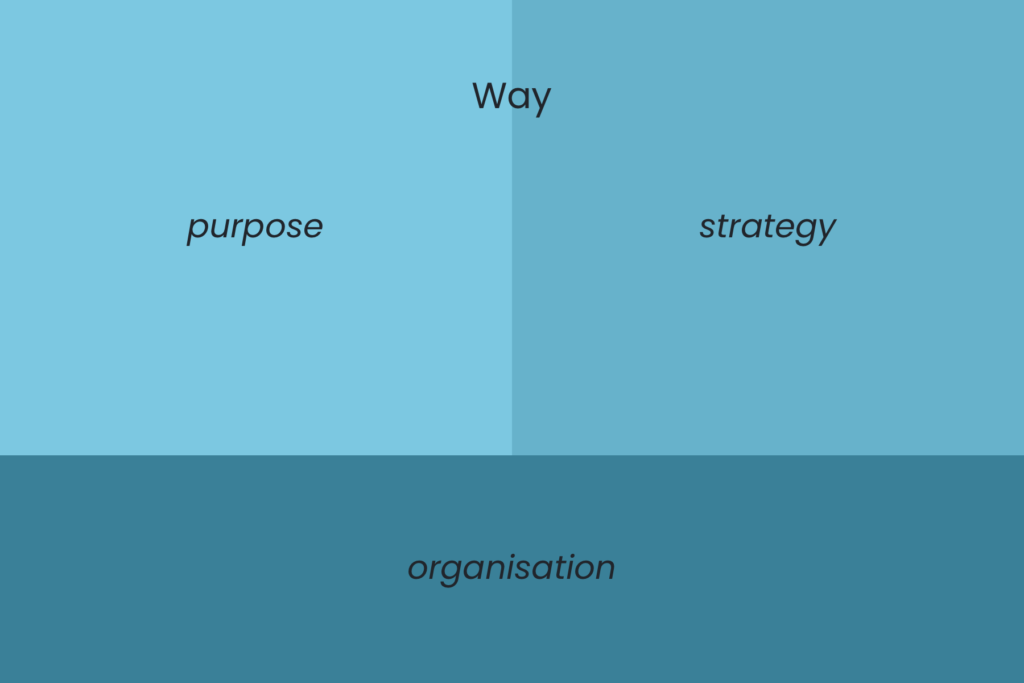
Purpose
Exploring the big picture of a person’s life can begin by unpicking what motivates them. What most matters to them? What can they see that would be worth attaining? Or worth avoiding?
The investigation can start with existing aspirations — with what they already feel drawn to. Or it can start at the foundation level of what they value and build upwards. Either way, the investigation aims to work towards a clear sense of ambition. What exactly do they want to happen, and when?
At every turn, aesthetics can shape the investigation for there is something intrinsically ugly about courses of action that cause unnecessary destruction or harm. They don’t sit right with our knowledge of the potential for intelligence to keep enriching the world, and of how awful it feels to be in pain of any kind. And there is something beautiful about the states of the world in which people are happy and healthy, and in which the world houses fresh wonders.
Every individual can see different aspects of what would make for a desirable future. When what they’re able to see is sculpted into clear ambitions, it is able to guide them through life.
Strategy
Once a person has a clear set of ambitions, they become able to approach life strategically, thinking projects through at the big picture level and working out what actions need to be taken for a particular ambition to be realised.
They can solve some potential problems in advance and avoid others altogether.
They can check the impact possible courses of action would have on other people, or on the natural world.
Strategic thinking provides a bridge that connects ambitions with actions that can be implemented, one by one.
Organisation
We all have ambitions in many areas of our lives — work, health, family, hobbies. So we can’t just focus on implementing a single strategy. Somehow we have to match all that we would like to get done with actual opportunities for action.
This means that, for a person to attain big picture alignment, they need to develop habits and routines that will help them to prioritise tasks and to decide what to do when. Such habits and routines form a personal organisation practice, or POP.
Ideally a person’s POP will mesh neatly with their strategic thinking. They will find it easy to capture tasks that they’d like to do, both from their strategising and from random thoughts that strike them during the day. They’ll have convenient ways to process those inputs, such as morning planning sessions. And it will always be easy for them to see the best options they have for what to do next.
A Sense of Way
Clarity of purpose, strategy and organisation can together provide a person with a complete sense of their personal path through life — their Way.